If you run a local service business in New England, your website is not a digital brochure. It is part of your sales system.
That matters whether you own an auto shop in Massachusetts, a gym in New Hampshire, a law firm in Connecticut, a plumbing company in Rhode Island, or a cleaning business in Maine or Vermont. People may hear about you from a friend, but before they call, they usually check you online.
Here is my honest take: relying only on word-of-mouth, a Facebook page, or a listing on someone else’s platform is a dangerous game. Those things can help, but they are not a foundation you control.
Your Website Helps Ready-to-Buy Customers Find You
The best leads are not always browsing casually. They are searching with intent.
They type things like:
- “Auto repair near me”
- “Divorce lawyer in Boston”
- “Emergency plumber in Braintree”
- “House cleaning service in Taunton”
A properly built website gives Google clear signals about what you do, where you work, and who you serve. Without one, you are asking Google to understand your business from scattered clues.
With one, you give your business a clear home base for Local SEO.
You Stop Depending Completely on Referrals and Lead Platforms
Word-of-mouth is valuable, but it is not predictable. Some months it is strong. Other months, it disappears.
That is not a stable growth strategy.
I saw this clearly while helping a local house cleaning business in Taunton, MA. Once the website was properly optimized around local services, service areas, and conversion paths, the business began receiving a massive, more predictable influx of local calls.
That changed the owner’s options. Instead of being trapped by expensive lead-generation platforms, they had more control over their own pipeline.
Your Website Builds Trust Before the First Call
Most prospects do not call the first business they see. They compare.
They want to know:
- Do you look legitimate?
- Do you serve my area?
- Do you offer the exact service I need?
- Do other people trust you?
- Can I contact you easily?
A Facebook page alone rarely answers those questions well. A clean, professional website does.
Trust is not only about looking polished. It is about reducing doubt fast. If your website feels outdated, thin, confusing, or missing, the prospect may assume your service experience is the same way.
You Control the Story Instead of Letting Platforms Define You
Your Google Business Profile, Facebook page, Yelp listing, and directory profiles all matter. But none of them gives you complete control.
Your website does.
You decide how your services are explained. You decide which reviews, photos, guarantees, certifications, and local proof points are emphasized. You decide what makes your business different.
In competitive New England markets, that matters. If your business has experience, strong reviews, specialized training, or a better customer process, your website should make that obvious.
Service-Area Pages Turn Local Search Into Real Leads
This is where many service businesses miss huge opportunities.
A single homepage saying “we serve the South Shore” or “we serve all of New England” is usually not enough. Google needs more specific, structured location signals.
We saw this with a plumbing and heating client in Braintree, MA. By focusing on specific localized service-area landing pages, the website started supporting a much stronger high-intent lead generation pipeline.
That kind of page strategy helps connect the business to searches like “water heater repair in Weymouth” or “heating repair near Braintree.” These are not vanity searches. These are people who may need help now.
Your Website Works 24/7, Even When You Are Closed
Your next customer may search at 6:30 a.m. before work, 9:45 p.m. after the kids go to bed, or Sunday afternoon when something breaks.
Your website does not sleep.
It can answer common questions, explain your services, display reviews, show your service area, and let people request help when your office is closed.
Timing matters. If someone needs a plumber, attorney, mechanic, trainer, or cleaning quote, they may not wait until tomorrow if a competitor makes the next step easier today.
Better Content Educates Customers and Pre-Sells Your Services
Good website content does not just fill space. It helps prospects make better decisions.
A useful service page explains what you do, when someone needs it, what problems it solves, and why choosing the right provider matters. Blog articles and FAQs can answer common questions before a prospect ever calls.
This is where lead generation for service businesses becomes more efficient. Educated prospects are often better leads because they already understand the value of the service.
Your Website Makes Your Advertising Work Harder
Paid ads without a strong website are like sending people to a weak salesperson.
You may get clicks, but you lose leads if the page is slow, unclear, generic, or not built around conversion.
A good website supports:
- Google Ads
- Local Services Ads
- Facebook and Instagram traffic
- Email campaigns
- Retargeting
- Google Business Profile clicks
This is why New England digital marketing should never treat the website as an afterthought. Your website is where paid traffic either becomes revenue or disappears.
Mobile Visitors Need a Fast Path to Contact You
Most local searches happen in real-life moments. Someone is in the driveway with a broken garage door. Someone is sitting in their car looking for an auto shop. Someone is comparing attorneys on lunch break.
That means your website must work beautifully on mobile.
It should load quickly, read clearly, and make the next step obvious. Phone buttons, forms, booking links, service menus, and location information should not be buried.
For local businesses, mobile design is not cosmetic. It is a lead-capture issue.
Your Website Gives You Data You Can Actually Use
Guessing is expensive.
A website gives you insight into what people are looking at, which pages bring traffic, which services get attention, and where leads may be dropping off.
You can learn which towns are producing interest, which services deserve stronger pages, which blog topics attract prospects, and whether visitors are taking action.
This is how Local SEO becomes more than “ranking reports.” The real question is not just, “Are we visible?” The better question is, “Is our visibility turning into qualified leads?”
Your Website Protects the Future of Your Business
Consumer behavior is not moving backward. People expect to research, compare, verify, and contact businesses online.
That does not mean referrals are dead. It means referrals now travel through digital trust checks.
Someone may hear your name from a neighbor, but then they search you on Google. If your website is weak or missing, that referral can stall. If your competitor looks more credible online, they may win the call even if you were recommended first.
Your website is not just about getting found. It is about being chosen.
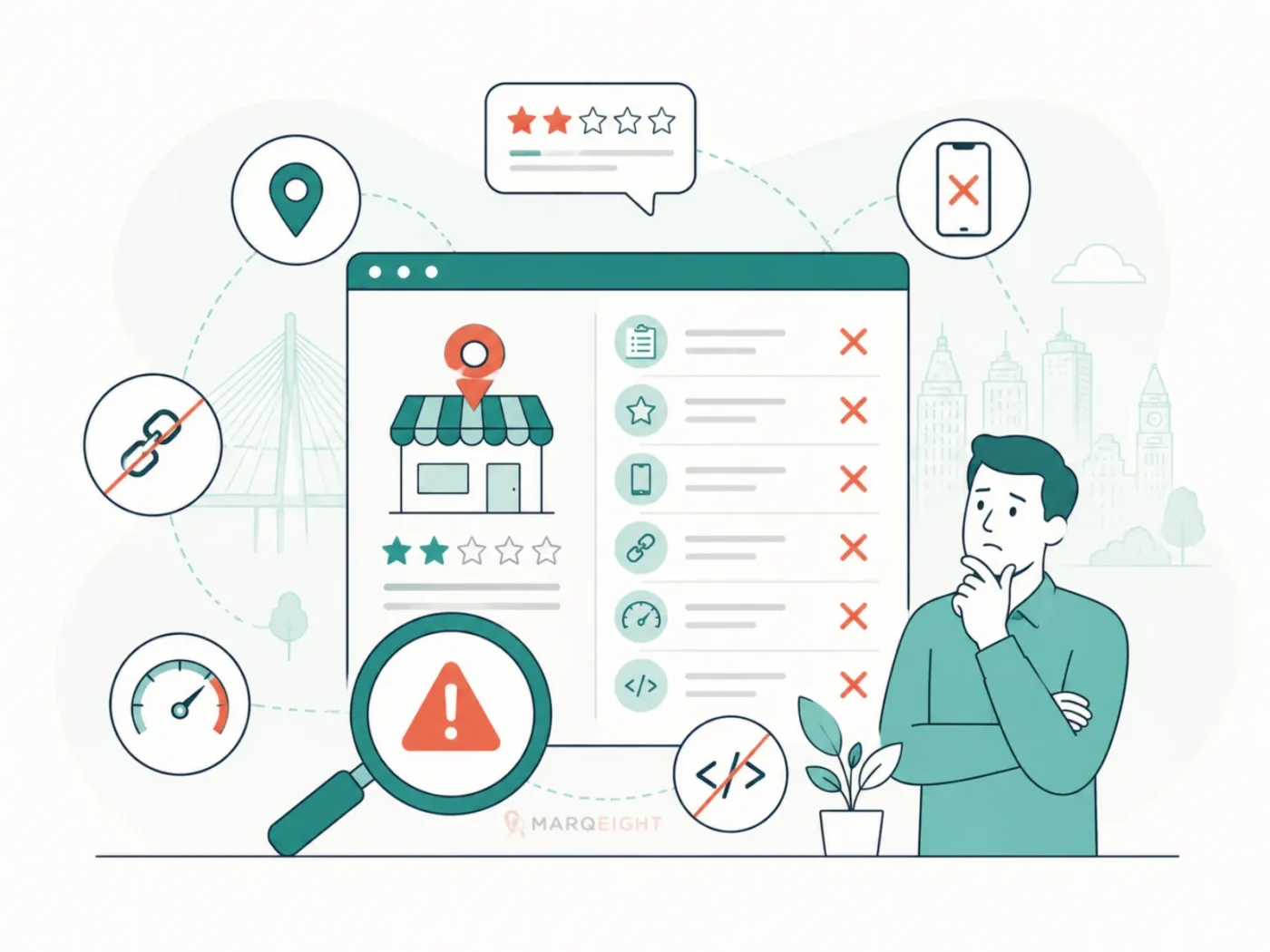
Before You Spend More on Marketing, Audit Your Visibility
If you own a service business in Massachusetts, New Hampshire, Maine, Vermont, Connecticut, or Rhode Island, take a clear look at your current online presence.
Search your most important service in your most important town. Look at your website the way a skeptical customer would. Check whether your service pages, location pages, reviews, contact paths, and Google presence all work together.
You do not need to chase every marketing trend. But you do need a digital foundation you control.
Start there. Audit what customers see before they call you. That one step can reveal why your competitors are getting found, trusted, and contacted while your business is still waiting for the phone to ring.