Turning Local Service Slowdowns Into Digital Marketing Wins
Seasonal slowdowns hit local service businesses across New England every year. One month you are buried in calls, the next you are staring at a quiet phone and an empty schedule. Landscapers, HVAC techs, roofers, painters, plow crews, cleaners, beauty and wellness pros, you all feel those swings.
Those slow weeks do not have to be dead space. They can be your best window to fix what is holding back your digital marketing for local businesses. When you are not racing from job to job, you finally have time to tune up your online presence so the next busy season comes in stronger and more predictable.
At MarqEight, we work with New England service businesses that live with these cycles every year. In this article, we will walk through how to turn downtime into a clear action plan for website design, local SEO, Google Business Profile, citation management, and online reputation, so your next peak season hits harder than the last.
Diagnose Why Your Local Leads Dip Before the Season
Many owners blame every slowdown on the calendar. The season does matter, but it is not the only reason calls drop. Often there are quiet digital problems stacking up in the background.
Common issues include:
- Website content that is old, thin, or missing key services
- Website missing critical service pages
- Weak local SEO that keeps you buried under competitors in search results
- A Google Business Profile with outdated hours, old photos, or wrong categories
- A Google Business Profile without the corresponding services listed on the website’s service pages
- Fewer fresh reviews, so your listing looks stale compared to others
On top of that, people search for local services differently now. They use mobile first, tap “near me” suggestions, ask voice assistants, and skim map results before they ever scroll to traditional website links. If you are not showing up clearly on phones and in Maps, you lose a lot of ready-to-book customers.
Before you pour time into fixes, you need a simple diagnosis. During or right before a slowdown, track:
- Where your website traffic is coming from
- How many calls and form fills you get from search and ads
- Which Google Ads campaigns are spending money but not bringing leads
- Where you show up in local rankings for your key services and towns
Then run a quick audit that you can repeat every off-season:
- Google your top service plus your town, like “roof repair”
- Check if you show in the map pack and how your listing compares
- Look at your main service pages and note the last time they were updated
- Scan major directory listings to see if your name, address, and phone match
Getting honest about what actually changed keeps you from guessing. You avoid wasting off-season budget on tactics that look fancy but do not fix the real problem.
Use Downtime to Rebuild Local SEO Foundations
When the schedule slows, your website and local SEO deserve center stage. This is the perfect time to clean up, expand, and make things clearer for both people and search engines.
Start with your service and location pages. Ask:
- Do we clearly list every service we want to sell next season, including seasonal work?
- Are our service areas spelled out, town by town, not just “greater area”?
- Are there strong calls-to-action so visitors know how to book or request a quote?
Use the quiet weeks to refresh content. Focus on:
- Rewriting thin pages so they explain the work, the process, and what makes you different
- Adding FAQs based on the real questions customers ask on the phone
- Creating helpful blog posts that answer off-season questions people search in New England
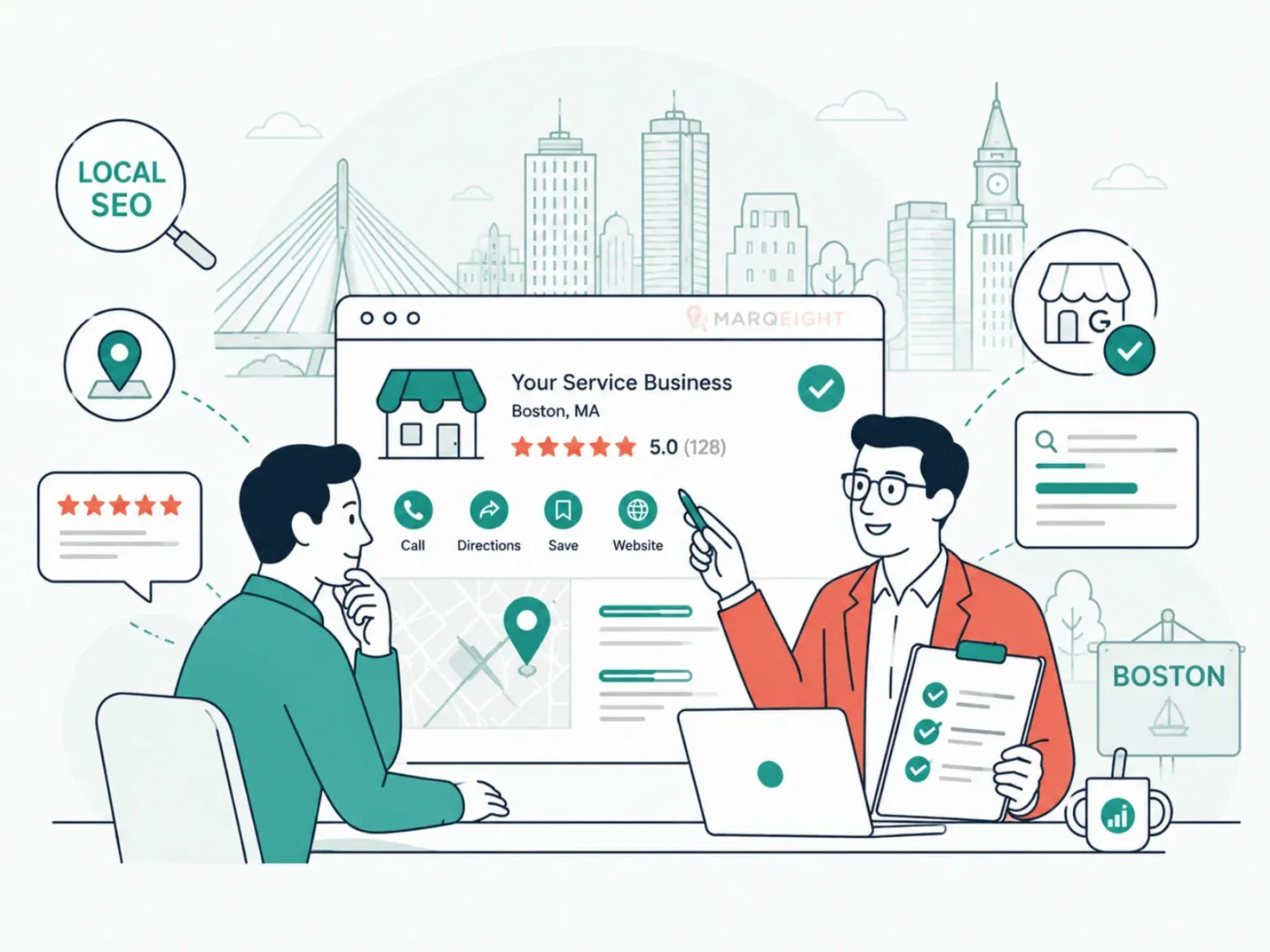
Your Google Business Profile is also a big part of digital marketing for local businesses. Use downtime to:
- Update categories so they match your core services
- Add fresh photos from recent jobs that show your actual work
- Post timely offers or reminders tied to upcoming seasonal needs
- Answer common questions in the Q&A Section so people see quick, clear info
Citation management is the unglamorous part of local SEO, but it matters. That means cleaning up your name, address, and phone across directories so they are consistent. When search engines see the same details across multiple sites, it builds trust and helps your local rankings.
All this work rarely fits into peak season, but it sets the stage. The more you improve your local SEO in slow months, the more predictable your lead flow becomes when things heat up again.
Turn Google Ads Into a Precision Tool, Not a Money Drain
During busy times, it is easy to let Google Ads run on autopilot and hope for the best. Slow periods give you room to turn it from a blunt tool into a sharp one.
Instead of pausing everything, tune your targeting. Look at which services and towns bring the best jobs and focus your keywords there. If a certain town always leads to small, low-value work, do you really want to pay for those clicks?
Use your account history to adjust:
- Bidding strategies, so more budget goes to campaigns that already convert
- Ad schedules, so you show most when your best leads usually call or submit forms
- Device targeting, so you match how your ideal customers actually search
Slow months are also perfect for building seasonal campaigns in advance. For example, create:
- AC tune-up and repair campaigns before warm weather hits
- Furnace check and heating campaigns before the cold returns
- Spring cleanup or exterior maintenance campaigns as snow melts
Write stronger ad copy while you are not rushed. Highlight things people care about:
- Fast response times
- Clear guarantees
- Local expertise in New England homes and weather
- Strong reviews and customer satisfaction
Make sure you are tracking calls, forms, and key on-site actions back to your ads. When you can see which keywords and ads bring real leads, not just clicks, you can cut waste and spend with more confidence as seasons swing.
Build Review Momentum and Local Trust While it Is Quiet
Your review profile can quietly decide who gets the click in local search. A long list of old reviews is less helpful than a steady stream of fresh ones that show you are active and trusted right now.
Use slow weeks to set up a simple, repeatable review process:
- Send a short follow-up text or email after every completed job
- Include a direct link to your main review platform, often Google
- Give your team a friendly script so asking for reviews becomes a habit
Plan how you will respond, not just collect. When someone leaves a review, good or bad, reply with:
- A thank you and a short note that sounds human, not canned
- A calm, professional answer if they had a concern
- A sign that you are local and understand the community
Then put your best feedback to work. With permission from the platforms that allow it, you can:
- Highlight top reviews on your key service pages
- Share short review quotes on social media
- Add review extensions or snippets in your Google Ads to boost trust
When you invest in your online reputation during slower periods, you show up to peak season with stronger social proof. That can be the deciding factor when a stressed homeowner is scrolling through three similar local options and needs to pick one fast.
Turn Your Next Slow Week Into a Digital Action Sprint
Instead of treating every slowdown like a surprise, you can plan for it and turn it into a focused “improvement sprint” for your digital marketing.
Here is one simple four-week plan you can adapt:
- Week 1: Run your audits, check rankings, and fully update your Google Business Profile
- Week 2: Refresh key service and location pages, add FAQs, and map out blog topics
- Week 3: Clean up citations, fix NAP issues, and lock in a repeatable review request process
- Week 4: Tune Google Ads targeting, build seasonal campaigns, tighten tracking and messaging
Set two or three clear goals before each off-season. For example:
- Raise your average review score or add a set number of fresh reviews
- Break into the top three map results for one high-value service and town
- Lower your cost per lead on Google Ads by trimming weak keywords
When you treat each slow period as a planned sprint instead of a panic, your digital marketing for local businesses gets a little stronger every cycle. Over time, you feel less at the mercy of the weather and more in control of how many quality leads find you online.
At MarqEight, we are based in New England and see these seasonal patterns up close. We build plans that match local cycles, from quiet shoulder seasons to peak months, so service businesses can grow with more confidence, season after season.
Frequently Asked Questions
What should I focus on during a seasonal slowdown to improve my online marketing?
Slow periods are an ideal time to update your website, improve your local SEO, optimize your Google Business Profile, clean up business listings, gather customer reviews, and prepare marketing campaigns for the next busy season. These improvements can help generate more qualified leads when demand increases.
How can I tell if my slow season is caused by more than just the time of year?
Start by reviewing your website traffic, local search rankings, Google Business Profile performance, call volume, form submissions, and Google Ads results. A simple digital marketing audit can reveal issues such as outdated content, missing service pages, inconsistent business information, or declining local visibility.
Why should I update my Google Business Profile during slower months?
Keeping your Google Business Profile current with accurate categories, fresh photos, updated business information, new posts, and answers to common questions helps maintain visibility in local search results. Regular updates also show potential customers that your business is active and engaged.
What is the best way to prepare Google Ads before the busy season starts?
Use slower periods to review campaign performance, remove underperforming keywords, refine geographic targeting, improve ad copy, and build seasonal campaigns before demand increases. This allows your ads to perform more efficiently when customers begin searching again.
How can customer reviews help my business recover from a seasonal slowdown?
A steady flow of recent reviews builds trust with both search engines and potential customers. Creating a simple review request process, responding to every review, and showcasing positive feedback on your website can strengthen your online reputation and improve local search performance before the next peak season.
Turn Local Searches Into Loyal Customers
If you are ready to attract more nearby customers and turn online searches into real revenue, we are here to help. Our team at MarqEight specializes in creating practical, results-focused strategies for Digital marketing for local businesses. We will work with you to understand your goals, fine-tune your message, and build a plan that fits your budget. If you are ready to get started or have questions about the best approach for your business, contact us today.